
.jpg)
V10: Fully Integrated Batch Modeling
Use Batch Modeling within Aspen Plus to combine reaction kinetics with the conceptual design, analysis and optimization of batch processes. Reduce batch cycle times and ensure product quality with batch distillation modeling and batch reaction modeling.
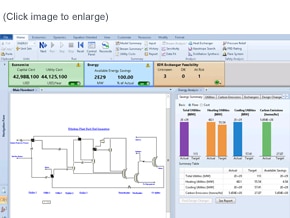
V8.8: Accelerate Engineering Productivity
Activated Analysis has been significantly improved for better performance, speed, and discoverability to promote a more efficient workflow. Activated Analysis fully integrates energy optimization, exchanger design & rating, and cost estimation tools, used by experts, with the process model using industry standard defaults or customizable templates.
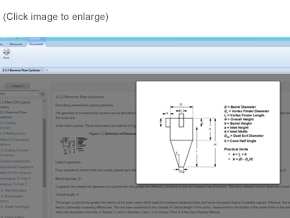
V8.8: Knowledge at your Fingertips
Access critical knowledge from 150 authors over 30 years from inside Aspen Plus for topics—including Applied Rheology, Bulks Solids Handling, Crystallization, Drying, Gas Cleaning, Slurry Handling, and more. Aspen Process Manual is now available inside Aspen Plus through aspenONE Exchange.

V8.6: Size and rate pressure relief devices with Aspen Plus
Relief Valve Sizing is now available in Aspen Plus! Ensure that proper relief valve sizing and rupture disk sizing methods are used throughout the overpressure analysis. Accepted industry standard API RP 520, 521 is implemented in Aspen Plus to calculate necessary pressure safety and rupture disk sizing specifications, including relief loads and orifice sizing.

V8.6: E-Learning in Aspen Plus
AspenTech currently offers Online Training to help you get up to speed faster with our products. Now with E-Learning in Aspen Plus and Aspen HYSYS, you have access to carefully curated learning content organized by topics. Find relevant E-Learning groups with a plethora of helpful material, including CBTs, Jump Start Guides, example models, video tutorials, blogs from the AspenTech Community, and more and learn more about topics like relief valve sizing and solids modeling.

V8.4: Conceptual solids unit models in Aspen Plus
With conceptual models, modeling solids processing equipment is now more accessible than ever. New additions to the unit operations prevent reliance on difficult-to-maintain homemade models. New models allow you to simulate a wide range of industrial spray dryers—and with an enhanced fluidized bed model, you can now consider chemical reactions.

V8.4: Activated Exchanger Design and Rating in Aspen Plus
Activated Exchanger Design & Rating (EDR) makes it easier than ever to design rigorous heat exchangers in Aspen Plus and Aspen HYSYS®. Rigorous designs can be utilized for accurate thermal and hydraulic modeling in simulation—allowing you to easily identify and monitor critical performance issues. Activated Economics and Activated Energy Analysis were also enhanced in V8.4.

V8.2: Live and historical plant data in Aspen Plus and enhancements for Solids Modeling
Plant View for Aspen Plus V8.2 features high-performance trends. Look at detailed histories for multiple tags simultaneously-from within the process simulator to better understand how the plant is operating and make improvements. In Aspen plus V8.2, pneumatic conveying, fluidized beds, and economics for solids processing equipment was also introduced.

V8.0: New Solids Modeling and Activated Analysis
Now you can optimize all types of chemical processes with the best modeling environment for the chemical industry. What if you could instantly find 10% more in energy or capital cost savings? With our new “Activate” feature, Aspen Plus users can see the energy and economic impact of design decisions on the fly. Solids modeling in Aspen Plus supports rigorous descriptions of solids processing steps.
.JPG)
V10: Physical Properties Enhancements
The industry-leading physical properties database is filled with new enhancements, deepening the ability to model complex operations involving solids. Engineers and chemists can easily perform calculations based on proven thermophysical property models and data, allowing the transfer of knowledge to flow seamlessly across your organization.

V10: Powerful Distillation Modeling Capabilities
Run batch distillation models that support reactive distillation and multiple stop criteria, enabling more flexible recipe definition for conceptual design and cycle time optimization. Animated flowsheets display column configuration and performance over time. Aspen Properties® seamlessly predicts VLE or VLLE behavior.
.jpg)
V10: New Crystallization Kinetics
New rate-based crystallization models in Aspen Plus V10 can be used in both batch or continuous applications. Take advantage of flexible expressions for nucleation and growth kinetics, used together with reactions, to predict particle size distribution.
.jpg)
V10: Easily Calibrate Models to Match Your Plant
All process simulation models used for supporting plant operations should be validated with plant data, where possible. In V10, easily connect and validate your models with plant historian and/or lab data without leaving the Aspen Plus simulation environment. Reuse models for revamps, process improvements, troubleshooting and real-time optimization.

V10: Usability Improvements
No programming experience required. Custom rate expressions eliminate the need to write subroutines, allowing new users to hit the ground running when modeling batch processes. Flexible models make it easier to represent real-world reaction kinetics, allowing organizations to improve scale-up innovation from batch to continuous processes.

V9: View More Inside Your Distillation Columns
Column Analysis in Aspen Plus allows you to view the whole column, identify any hydraulic issues, understand the operating range, and communicate your findings. See how modifications in packing and trays change the hydraulic plots and the operating range of the columns. Calculate costs as you make changes.

V9: Easily Export Custom Models to Aspen Plus
These customized models can be packaged for use in Aspen Plus with a click of the mouse, or linked to Excel via Aspen Simulation Workbook for easier sharing. With V9, attach author-created help files and visualize 2D/3D plots for your customized model, making it easier to lay out your data in a way that makes sense to you.
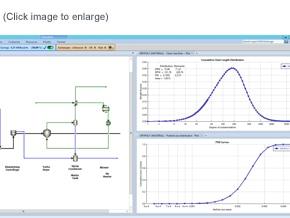
V8.8: Save Energy Costs in Polymer Processes with Solids Modeling
The Polymer Process Modeling Capabilities of Aspen Plus has been extended so that polymers (and oligomers) can be treated as solids below their melting points— allowing users to model the entire polymer process including drying and dewatering.
Upcoming Events
Wednesday, June 3, 2026
 Live Webinar:
Designing Distillation Columns with Confidence Using Aspen Plus®
Live Webinar:
Designing Distillation Columns with Confidence Using Aspen Plus®
Tuesday, June 9, 2026
Live Webinar:
Boost Your Process Efficiency with Integrated Heat Exchanger Design & Rating
Tuesday, June 16, 2026
Live Webinar:
Transform Upstream Production, Development and Exploration with Agentic AI